

Konecta Foundation and Down Madrid reaffirm commitment to inclusion with new digital skills course for people with intellectual disabilities

Rebuilding lives together
– 3D printing is a tool that can open a world of possibilities for people with intellectual disabilities and make their environment more accessible.
– Konecta Foundation and Down Madrid launch ‘Change Makers’, a pioneering 3D printing project. The program combines technological innovation and education to foster new social and employment opportunities.
Madrid, December 2, 2025 – Konecta Foundation and Down Madrid have renewed a collaboration agreement, paving the way for a new edition of the technology training project held at the Complutense University of Madrid. This pioneering program is aimed at people with intellectual disabilities, with the goal of promoting their social and employment inclusion through training in digital competencies.
During the 2024-2025 academic year, the program focused on 3D design and printing technology to develop digital skills as tools for empowerment and autonomy. In the current 2025-2026 edition, the curriculum will expand to encompass all aspects of Artificial Intelligence and its practical applications (agentization).
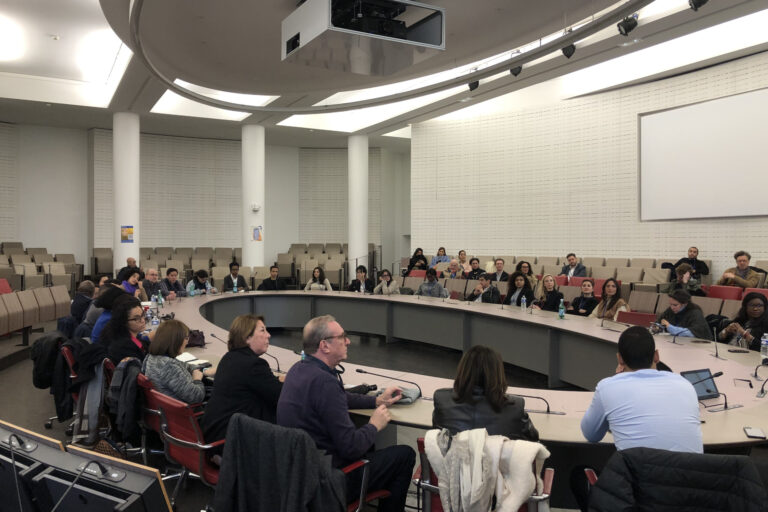
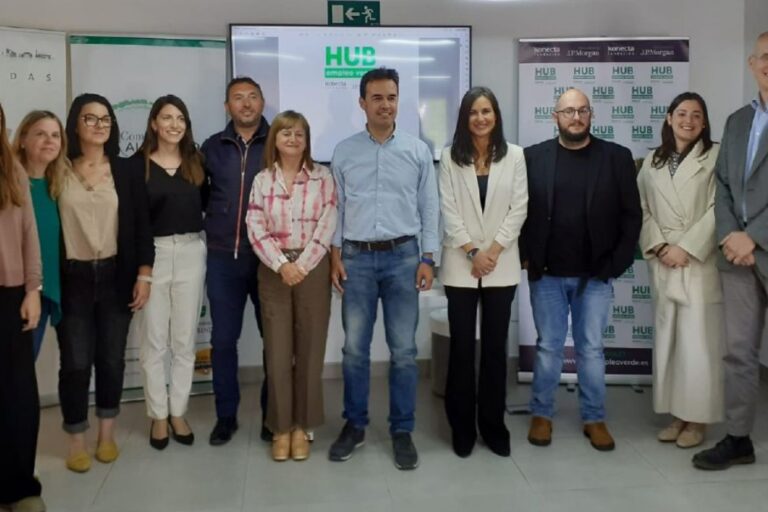
The inaugural event for the course, held at the Faculty of Education of the Complutense University of Madrid, was attended by Ignacio Egea, President of Down Madrid; José Manuel Chacón, Director of Digital Transformation and Innovation at Down Madrid; Graciela de la Morena Carra, Director of Konecta Foundation; and Paula Oliver Picallos, Project Manager at Konecta Foundation. Also in attendance were Borja Jordán and Marián García, volunteers from Down Madrid, and Sergio Vázquez, ICT teacher for the program.
In this context, Graciela de la Morena Carra stated, “3D printing is not only a technology of the future, but a powerful tool for inclusion. With this project, we want to demonstrate that people with intellectual disabilities can be protagonists in the digital transformation.” She added, “For two decades, the Foundation has been driving employability, digital inclusion, volunteering, social innovation, and community development projects that have improved the lives of more than 220,000 people in vulnerable situations.”
For his part, José Manuel Chacón expressed, “When we started with 3D printing, it was very difficult to think in terms of depth, dimensions… But we have achieved it, and now we are testing ways to transfer everything we have learned in the classroom to the work environment. In this sense, we want to generate production at the ACHIRA Special Employment Center. For example, by printing buttons to reduce costs.” Chacón also noted, “While generating production, we can provide employment to people with intellectual disabilities who have acquired the necessary skills to operate these machines.”
The new edition of the ‘Change Makers’ course, driven by Konecta Foundation and Down Madrid, champions 3D printing as an educational and inclusion tool for people with intellectual disabilities. Through this program, students will develop key skills such as spatial organization, critical thinking, and problem-solving, while learning to design and create in 3D.
The course combines innovative methodologies like STEAM and gamification, using physical resources such as LEGO pieces alongside digital tools like tablets, computers, and 3D design software. The goal is to foster the creativity, exploration, and autonomy of participants in an accessible environment that enhances their participation in the digital society.
For Carlos Manuel González Fraga, a participant from the previous edition, the course meant acquiring new skills and also strengthened the bond with his peers: “Each of us can design objects in 3D using the program. It’s difficult, but we manage it, and we are a family.”
About Konecta Foundation
Created in 2005 by Konecta, the Konecta Foundation is a cornerstone of the company’s social strategy, driving initiatives that generate strong social and business impact with a focus on employability, inclusion, and sustainable development. The Foundation actively supports vulnerable groups through targeted programs in the BPO and Customer Experience sectors, while also addressing pressing social challenges. Its work is structured around three strategic pillars: Employability, Social innovation, and Community development. To date, the Foundation has positively impacted more than 220,000 people, integrated over 16,000 individuals from vulnerable backgrounds into the labor market, and invested more than 20 million euros in social projects.
About Down Madrid
Down Madrid is a non-profit organization whose mission is the full inclusion of people with intellectual disabilities, as well as the improvement of their quality of life from birth through aging. The work carried out by Down Madrid for over 30 years would not have been possible without the collaboration of the individuals and entities that support its efforts.